





Radon solutions in older homes GR 38
BRE (Building Research Establishment) is an independent, research-based consultancy, testing and training organisation, operating in the built environment and associated industries.
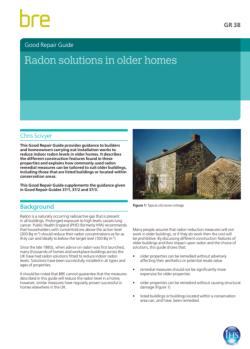
Radon solutions in older homes (GR 38) was written by Chris Scivyer and published by BRE on 2 April 2014.
Radon is a natural, colourless, odourless, radioactive gas formed by the radioactive decay of small amounts of uranium that occur naturally in all rocks and soils. It can move through cracks and fissures in the subsoil and eventually to the atmosphere. Most of this radon will disperse harmlessly, but some will collect in spaces under or within buildings.
For most UK residents, radon accounts for half the annual radiation they receive. Exposure to particularly high levels of radon may increase the risk of developing lung cancer. While it is recognised that the air inside every building contains radon, some buildings in certain areas of the UK might have unacceptably high concentrations unless precautions are taken. South-west England is of principal concern, but high concentrations of radon are also found in many other areas.
This 8-page Good Repair Guide provides guidance for builders and homeowners carrying out works to reduce indoor radon levels in older homes. It describes features found in older properties and explains how commonly-used radon remedial measures can be tailored to suit older buildings, including listed buildings or those located within conservation areas.
GR 38 supplements Good Repair Guides 37/1, 37/2 and 37/3.
Its contents are:
- Background.
- Construction features and their impact upon radon solutions.
- Other issues.
- References.
[edit] Related articles on Designing Buildings Wiki
- BRE articles on Designing Buildings Wiki.
- BRE Buzz articles on Designing Buildings Wiki.
- BRE Buzz.
- BREEAM.
- Building Research Establishment.
- Methane and other gasses from the ground.
- Radon protection for new domestic extensions and conservatories with solid concrete ground floors (GG 73 revised).
- Radon protection for new dwellings GG 74.
- Radon protection for new large buildings GG 75.
- Radon.
- Radon: Guidance on protective measures for new buildings BR 211.
Featured articles
Check out some of the best features and news from Designing Buildings as well as key stories from around the web.

Government approach could undermine delivery and regeneration.
World's first mass timber data centre.

The overlooked environmental aspect of data centre development.
Introduction to radon awareness

New technical information sheet published by CIOB.

Updated supplier guide can help electrical contractors engage with NHP.

CIAT confirm the winners of the 2026 architectural technology awards.

Government launches a one stop shop for flood preparedness.

Sir Edwin Lutyens: Britain's greatest architect? Book review.

CIOB publishes free template to help assess and manage risks.
ECA's reflections on Party Conference season

Burnham wants to be confident of winning before asking for a fresh mandate.
New Chief Construction and Scientific Adviser

Sergio Cavalaro, Professor of Infrastructure Systems at Loughborough University.
Building safety levy for England

CIAT publish estimator tool for members.

Water sector faces a growing crisis that could slow the delivery of vital infrastructure.